
Sarasota Municipal Arrest Routes
Municipal police holding and intake is a routing category, not a separate county jail. Sarasota Police, North Port Police, Venice Police, Longboat Key Police, and other agencies can make an arrest. The arresting officer and agency create the arrest or incident report. If the person is accepted into Sarasota County Correctional Facility, SCSO creates the booking and later county release record. The Sarasota Clerk maintains the court case and final legal disposition.
A short police hold can end without county booking, depending on the lawful process and event. In that case, an SCSO name search may show nothing because SCSO never created a booking episode. The correct follow-up is the arresting agency’s record and the court docket, not a claim that a jail record vanished. If county booking did occur, use the SCSO route for actual release or transfer from that jail.
Trace a Municipal Release
Begin with facts that separate similar events: full legal name, date of birth, arrest date, city, location, arresting agency, report number, booking number, and court case number when lawfully known. A city police report may record the officer’s action and probable-cause narrative. It does not certify the later jail departure or the case result.
- Identify the arresting municipal agency from paperwork or the known event.
- Search the SCSO Arrests & Inmate Search for a county booking.
- Call SCSO Booking at 941-861-4601 if a recent custody change is unclear.
- Check Florida VINE for a Sarasota County custody event.
- Read the same case in Sarasota ClerkNet for bond, release, charge, and disposition entries.
- Request the arrest report from police and the release record from SCSO when both exist.
The Sarasota County released inmate search provides the full named-person reconciliation. The municipal route supplies the arrest origin; it does not replace county custody records.
Sarasota County Booking Check
The official SCSO search is labeled Arrests & Inmate Search and includes current and prior offenses. It is not a dedicated municipal holding roster or final-disposition database. The sheriff warns that data changes quickly, does not detail final disposition, and may not reflect true current location, status, or release date.
The official search shell shows that warning and the county entry point.
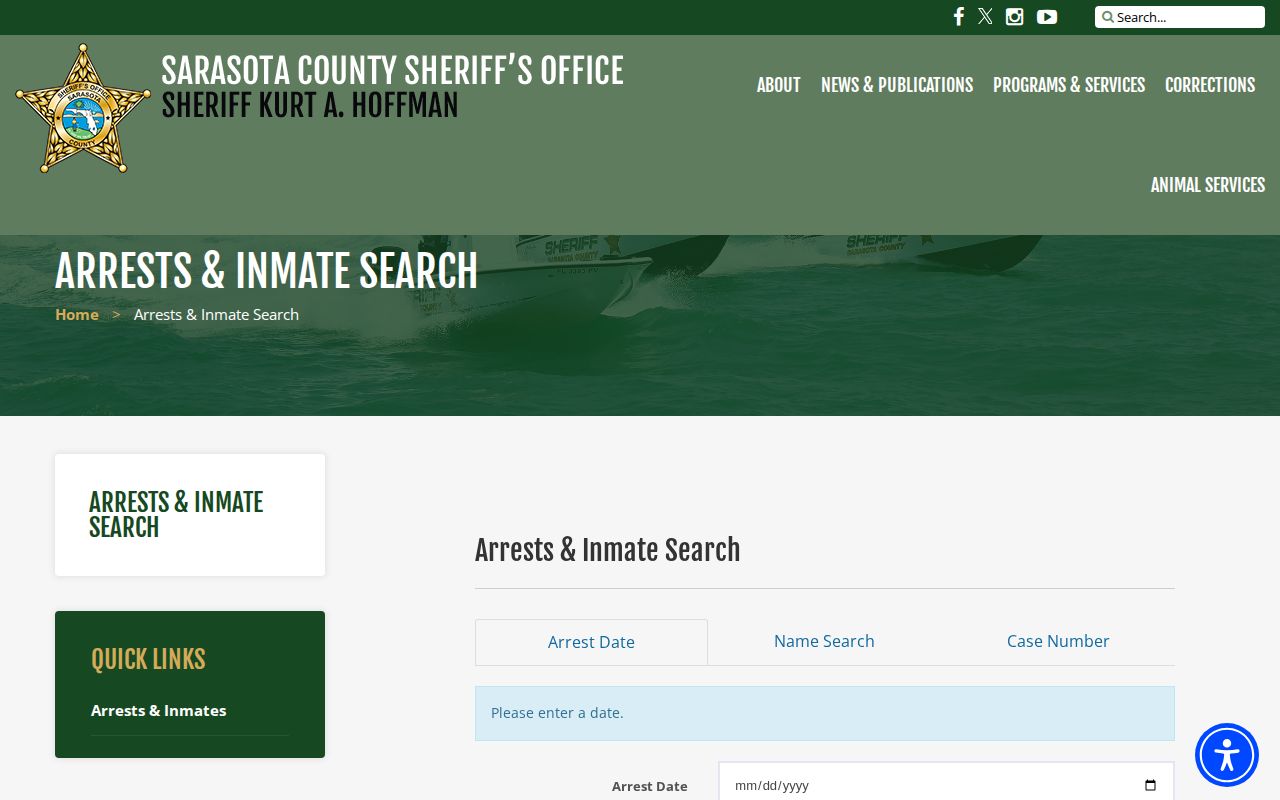
Use a result as an index to a booking episode. Compare arresting agency, booking date, case, and identity. A visible prior offense does not mean current custody, and a missing result does not prove municipal release.
Sarasota Booking and Records
Booking is the operational contact for current county custody. Records is the document custodian. The two functions are near the county court complex but have different addresses and tasks. The jail sits at 2020 Main Street. SCSO Records is at the Criminal Justice Center on Ringling Boulevard. The Clerk handles court documents.
SCSO Corrections and Booking
2020 Main Street
Sarasota, FL 34237
941-861-4601
Public lobby daily, 7 a.m. to 7 p.m.
For county documents, use the SCSO public-record request page, email Records@sarasotasheriff.org, call 941-861-4025, or visit 2071 Ringling Boulevard on weekdays from 8 a.m. to 5 p.m. Name the booking episode and ask for the actual release date and time, release authority, transfer destination if public, and booking photograph when needed.
Request the municipal arrest report from the police agency that created it. Do not ask SCSO to certify a city report it does not maintain, and do not ask a city police records unit to certify the county jail’s departure time.
Read Sarasota Release Processing
SCSO reports roughly 50 to 60 bookings each day and 15 to 20 releases per shift. Those figures describe work volume, not a separate city release schedule. A person brought by Sarasota Police and a person brought by North Port Police enter the same county booking workflow when accepted at the facility. Booking photographs and fingerprints are taken during intake, and Pre-Trial Services may interview the person.
The SCSO Jail Booking page explains intake and release responsibility.
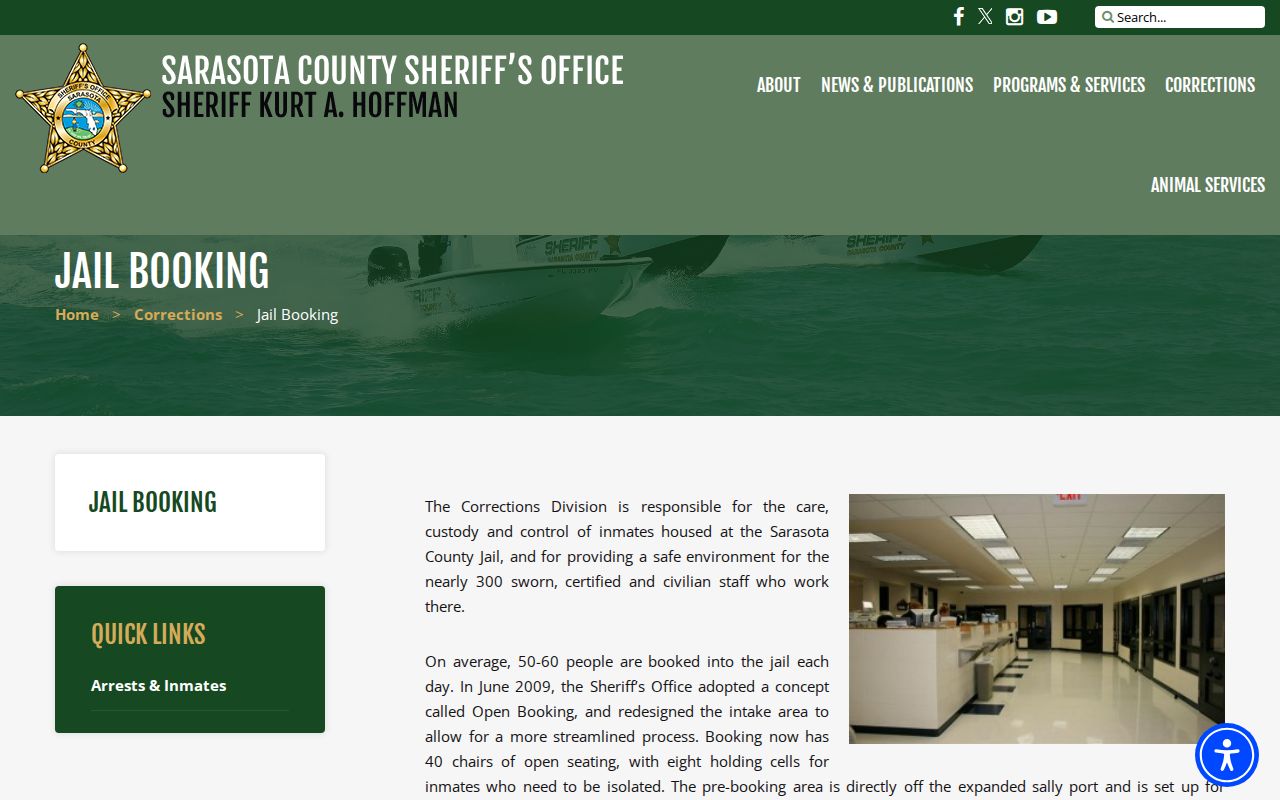
A bond payment or court order is not the actual departure time. Booking must check holds and process the release. If another authority assumes custody, the county episode can end without a community release.
Note: The arresting agency, jail custodian, and court each create a separate record in the same case trail.
Sarasota Court Disposition Check
The Sarasota Clerk docket outlives a short police hold or county jail stay. Search by the defendant and match the case number, charge, arrest date, and other lawful identifiers. Read the register of actions and filed documents rather than relying on a single case-status label. Useful entries include bond and release orders, charging documents, dismissal, plea or verdict, judgment, sentence, probation order, violation, and termination.
The ClerkNet public case search is the local court route.
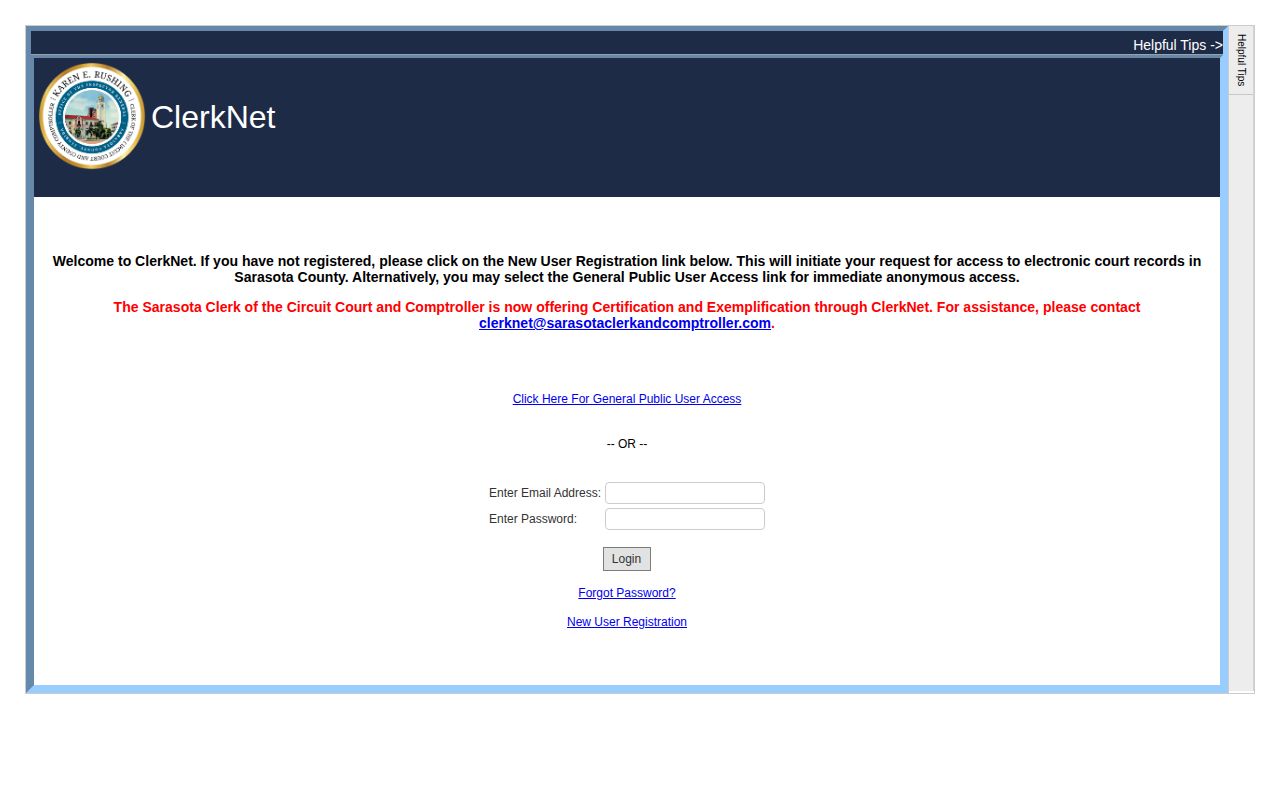
The court establishes legal authority and disposition. It may order release before jail processing is complete. Conversely, a police release can occur before a later charging decision. The docket and custody record should be compared, not collapsed.
Municipal and County Records
Ask each office for the record it created. A municipal arrest report can identify the arresting agency, date, alleged offense, and narrative subject to exemptions and redactions. A county booking and release record can identify intake and departure details. A court file can establish bond, disposition, sentence, or dismissal. Florida VINE can provide a fast county custody event but is not a certified archive.
| Question | Source | Record |
|---|---|---|
| Who made the arrest? | Municipal police | Arrest or incident report |
| Was county booking created? | SCSO | Booking record |
| When did county custody end? | SCSO Records | Booking and release record |
| Why was release authorized? | Court and SCSO | Order plus release authority |
| What was the case outcome? | Sarasota Clerk | Docket and filed disposition |
| Did another agency receive custody? | SCSO and receiver | Transfer and new custody records |
A public result can be incomplete or restricted. Ask for a narrow date range and exact event. If only part of a Florida record is exempt, the custodian may redact that part and release the remainder as law permits.
Municipal Transfer Destinations
County booking may end in several ways. Bond, recognizance, a pretrial order, dismissal without another hold, time served, or sentence completion can lead to the community. A state sentence can send the person to FDC reception. Another warrant can cause transfer to a different sheriff. A federal matter can lead to U.S. Marshals or BOP custody. An immigration handoff calls for ICE ODLS and DHS-VINE.
- Arrest report
- The arresting agency’s account of its own event.
- Booking
- Formal intake into the county jail record.
- Release authority
- The bond, order, sentence event, or transfer that permits departure.
- Disposition
- The court’s legal outcome, not the jail exit time.
- Transfer
- Movement from one custodian to another.
Follow the named receiver. Do not use FDC for a county-only case, BOP for an ordinary local arrest, or ICE based on personal traits. The record must support the route.
When No Booking Exists
If SCSO has no booking for the event, return to the municipal agency and court. Confirm whether the person received a notice, was released by the arresting agency, was taken to another county, was transferred under another authority, or was not formally booked. Request the exact arrest report and provide the report number when known.
A no-result can also reflect spelling, date, confidentiality, sealing or expunction, a different jurisdiction, or system change. It cannot prove that no arrest occurred. Sarasota Clerk records may be restricted, and older files may require a copy request. Match the event with exact dates and case numbers.
Municipal police stations are not presented here as long-term detention facilities with public release rosters. That is the central routing fact. When county booking exists, SCSO owns the release event. When it does not, the arresting agency and court are the proper starting points.
Public Record Search
Sponsored Results