
Circuit 12 Is Not Jail
FDC Community Corrections supervises people who live outside prison under legal terms. Circuit 12 covers Sarasota, Manatee, and DeSoto. Its offices receive reports, monitor court or commission conditions, and maintain supervision records. They do not operate as county lockups, prison reception centers, or public inmate-release counters. A person listed at a Circuit 12 office has not been booked into that office.
This difference changes the search. Physical release from Sarasota County jail belongs to SCSO Booking. Release from state prison belongs to FDC’s Released Inmate Search. A Circuit 12 result answers whether state-administered legal supervision is active after release. Some records can show both a past prison release and current supervision. Others involve court-ordered probation without a state prison term.
Search Circuit 12 Supervision
Open the FDC Offender Search menu and choose Supervised Population. Use a six-character DC number when known. A name search should be checked against date of birth, aliases, photograph, offense county, case, supervision type, status, dates, and office. All Corrections Offenders is the best second pass when it is unclear whether the person moved from prison into supervision.
- Select Supervised Population for a post-release or probation question.
- Enter the DC number or exact name.
- Open the matching profile only after comparing identity fields.
- Read the supervision type, status, start date, termination date, and office.
- Check the court order or FCOR record for the legal source of the terms.
- Contact the listed office for routine record clarification.
The Sarasota County release search covers the earlier county custody event. Do not use the live SCSO roster to decide whether FDC supervision ended.
Circuit 12 Search Results
The official supervised-population screen demonstrates the correct public route. It is built for supervision, not incarceration.
FDC’s Supervised Population search accepts a name or DC number.
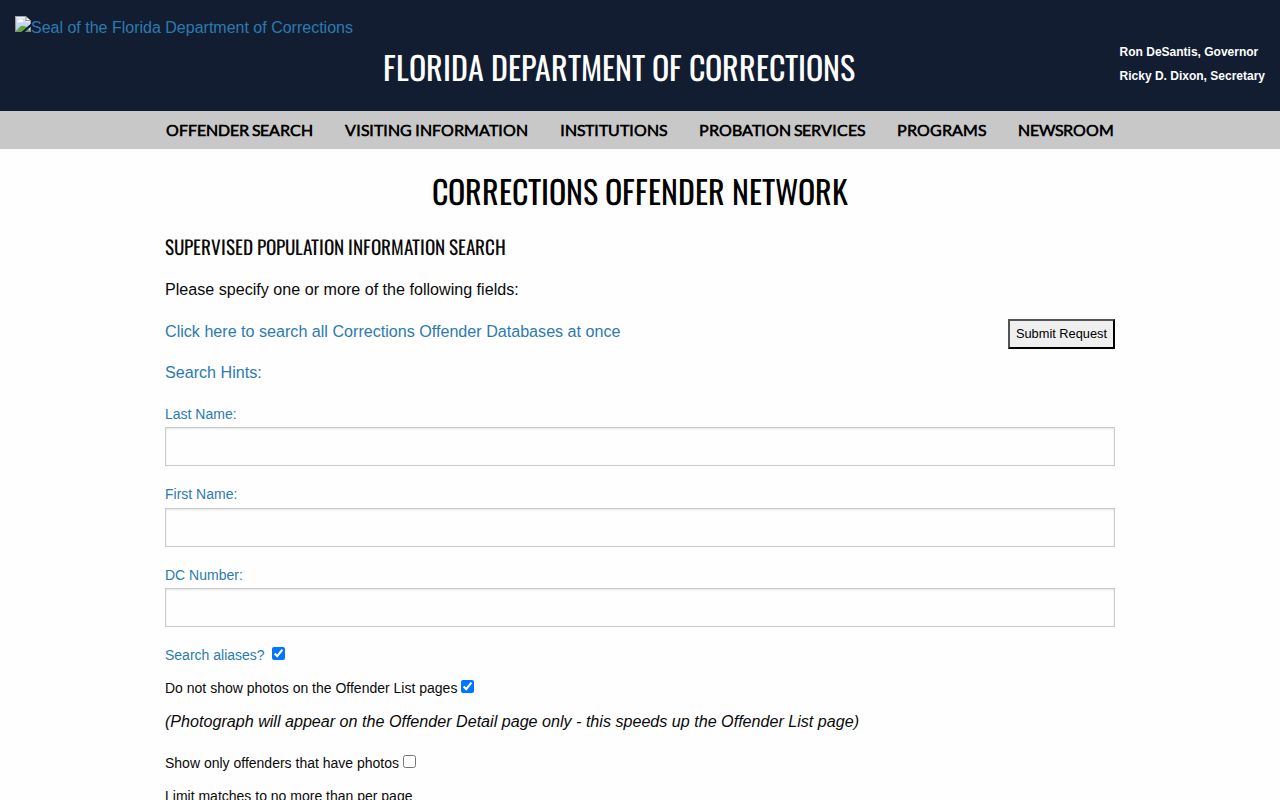
A correct match may show legal status after release, but it does not disclose every case-management fact or guarantee that a named officer will discuss protected details.
| Field | What it can establish | What it cannot establish alone |
|---|---|---|
| Supervision type | Probation, parole, conditional release, or other listed control | Current jail location |
| Status | Publicly reported active or other state | Every pending court action |
| Start and termination dates | Scheduled supervision span | Final discharge before update |
| Office | Administrative reporting location | A detention placement |
| DC number | System identity | Identity without cross-checking |
Circuit 12 Sarasota Contact
The FDC Sarasota Circuit Office directory identifies the main local supervision contact. It serves court-placed probation and community control as well as people released from prison into state supervision.
FDC Sarasota Circuit Office
1870 17th Street
Sarasota, FL
941-554-5921
Serving DeSoto, Manatee, and Sarasota counties
Call for office routing and published operational guidance. Do not assume the main office is the assigned reporting location for every person. Assignments can change, and staff may limit disclosure of case-management details. The public FDC profile is the safer first step. Use the exact office field from the current record.
For a release or discharge document, FDC’s public-record process is distinct from the circuit office’s day-to-day reporting work. Identify the DC number, supervision type, dates, and document sought. The Sarasota Clerk holds the underlying county court orders when probation or community control arose from a Sarasota case.
Circuit 12 Supervision Types
Probation is usually imposed by a court instead of, or following, custody. Community control is more intensive court-ordered supervision. Conditional release is a state-law post-prison program for specified eligible cases. Parole applies mainly to older-law and limited exception cases and is not a label for every person who leaves prison. The Florida Commission on Offender Review makes parole and specified conditional-release decisions, while FDC performs supervision.
- Probation
- Court-ordered supervision in the community.
- Community control
- Intensive court-ordered control with stricter limits.
- Conditional release
- Statutory post-prison supervision for eligible cases.
- Parole
- Commission-authorized release used in eligible cases.
- Discharge
- The recorded end of the supervision obligation.
Read the exact label. Calling probation “parole” can misstate who ordered it and how it ends. A person can also complete physical custody while remaining subject to one of these terms.
Circuit 12 Absconder Checks
An absconder is a person reported as having left supervision without authorization or stopped required contact. It is not the same as a routine change of address or completed discharge. FDC provides a separate fugitive or absconder search. If a public result indicates absconded, fugitive, warrant, or violation, quote that current label and do not describe the person as successfully discharged.
The official Absconder/Fugitive Search is the correct FDC route for that distinct status.
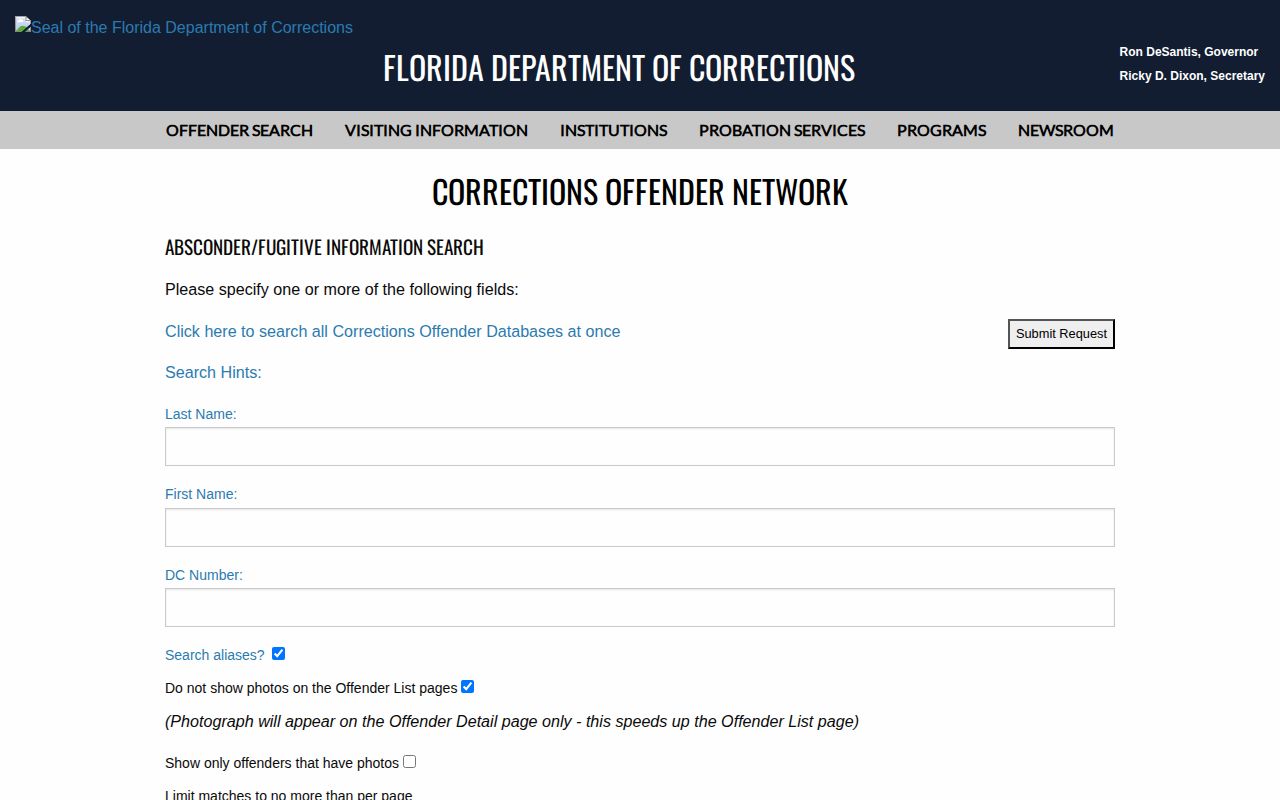
A match should be checked for identity and currency. A warrant may lead to arrest or return to custody, but a public search does not replace emergency reporting or an official warrant record.
Note: Supervision data is fully refreshed weekly, while termination dates and location changes update nightly, so confirm recent changes.
Circuit 12 Court Records
The Sarasota Clerk docket provides the legal history for court-ordered probation and community control. Read the judgment, probation order, violation filing, revocation order, and termination or discharge document. A case label alone can hide the event sequence. The FDC profile reports the corrections status, while the filed order explains the court’s act.
FCOR records apply when parole or commission-administered conditional release is involved. An agenda proves scheduling, not the final outcome. If no decision search is available, request the Commission action or order, then compare it with the later FDC release and supervised-offender profiles. Modern Florida sentences are generally not traditional parole cases.
When records conflict, ask each custodian about its own field. Do not turn a future termination date into proof that discharge occurred. After the date, look for an updated status and any filed termination document.
Circuit 12 Release Sequence
A clean state-prison path reads: FDC incarceration, actual prison release, Circuit 12 supervision when assigned, then discharge. A county probation path may read: Sarasota court order, physical release from county custody if any, Circuit 12 supervision, and court or FDC termination. Pretrial Services is separate. Sarasota’s court-run pretrial reporting is not FDC probation and does not make the circuit office a jail.
Physical freedom and legal control can coexist. The supervision record should be used to confirm the latter, not to imply incarceration. If the person returns to custody after a violation, search the agency that now holds the person. That might be SCSO, FDC, or another authority.
For routine verification, preserve the date checked, exact status wording, DC number, and office shown. For formal proof, request the record or filed order. This keeps a changing public profile from being treated as a permanent certificate.
Termination deserves a fresh check. The public profile may show a planned termination date before staff post the final status, while a court file may contain a later modification, violation, or discharge order. Compare the same DC number and case rather than using a name alone. When a person has more than one supervision case, one term can end while another remains active.
Circuit 12 office data also can change after a move or reassignment. The directory supplies the regional administrative contact, but the individual profile supplies the office tied to the current public record. Call the published office for routine routing and follow its instructions. Do not publish an officer assignment that has not been verified, and do not infer noncompliance merely because a caller cannot obtain protected case-management details.
FCOR and FDC have different roles. FCOR makes parole and specified conditional-release decisions; FDC carries out supervision. A scheduled FCOR hearing is not a grant, denial, revocation, or discharge. Verify a later Commission order and the updated FDC profile before describing the outcome.
Public Record Search
Sponsored Results